Electrical Testing Meters for Guitars
Best Meters for Guitar Pickups
Electrical testing meters for guitars are a must-have tool for diagnosing, modifying, and optimizing electric guitar pickups and circuits. Guitar electronics are relatively simple compared to many modern systems, yet they involve key electrical principles—resistance, inductance, capacitance, magnetic field behavior, and signal waveform analysis.
Tools such as a Digital Multimeter (DMM), LCR meter, Gauss meter, and oscilloscope each provide different levels of insight, from basic troubleshooting to advanced signal analysis. Choosing the right instrument depends on whether the goal is quick fault detection, detailed component characterization, or tonal analysis.
Digital Multimeter (DMM)
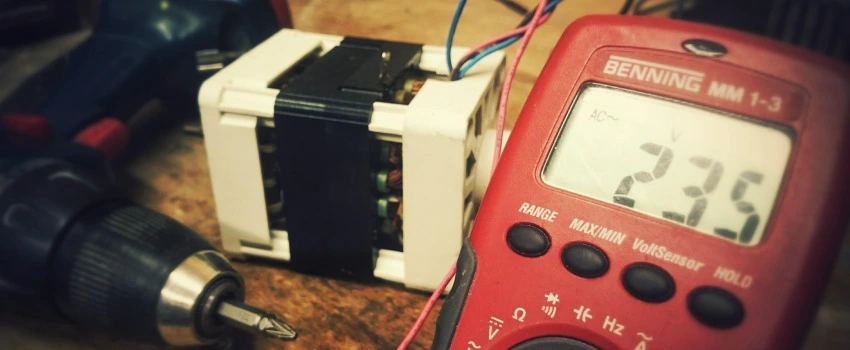
A Digital Multimeter is among the most fundamental and widely used electrical testing meters for guitar electronics. It measures voltage, current, and—most importantly for pickups—resistance and continuity. In guitar work, resistance readings are used to verify pickup coil health and approximate output characteristics. For example, typical passive pickups measure several kilo-ohms depending on design, and abnormal readings can indicate shorts or broken coils.
Pros:
A DMM is inexpensive, portable, and easy to use, making it ideal for beginners and professionals alike. It provides immediate diagnostic information, such as whether a pickup has continuity or falls within expected resistance ranges. Because it can test entire circuits from the output jack, it allows non-invasive troubleshooting .
Cons:
Despite its usefulness, a DMM offers limited insight into dynamic behavior. It cannot measure inductance directly (on most basic models), nor can it show how a pickup responds to frequency or signal changes. It also provides only static measurements, which may not fully reflect real-world performance—especially with active pickups, where resistance readings are less meaningful.
Best Uses:
A DMM is best for quick diagnostics: checking pickup coil integrity, verifying wiring continuity, identifying shorts or open circuits, and comparing relative output levels between pickups. It is the first tool any guitar technician or hobbyist should own.
LCR Meter
An LCR meter measures inductance (L), capacitance (C), and resistance (R), offering a deeper look into the electrical characteristics of pickups and tone circuits. Unlike a DMM, it can quantify inductance—the key parameter influencing a pickup’s tonal response and resonant frequency.
Pros:
The main advantage of an LCR meter is its ability to characterize pickups more completely. Inductance measurements help predict tonal qualities such as warmth, brightness, and midrange emphasis. It also allows accurate measurement of capacitors used in tone controls, ensuring correct component values for circuit design and modification.
Cons:
LCR meters are generally more expensive and complex than DMMs. They often require removing components from the circuit for accurate readings, which can be inconvenient. Additionally, interpreting inductance and capacitance values requires more technical knowledge, making them less beginner-friendly.
Best Uses:
An LCR meter is ideal for pickup designers, advanced modders, and technicians who want to analyze or replicate specific tonal characteristics. It is particularly useful when matching pickups, selecting tone capacitors, or studying how circuit components influence frequency response.
Gauss Meter
A Gauss meter measures magnetic field strength, which is directly relevant to guitar pickups because they rely on magnetic fields to convert string vibrations into electrical signals.
Pros:
This tool provides insight into magnet strength and consistency across pickup poles. It is especially useful for evaluating magnet aging, demagnetization, or differences between pickup designs. By measuring magnetic flux density, it helps correlate magnet strength with output level and sensitivity.
Cons:
Gauss meters are specialized tools with limited application outside magnetic analysis. They do not provide any electrical measurements, so they must be used alongside other instruments. For most basic repair tasks, they are unnecessary.
Best Uses:
A Gauss meter is best suited for pickup builders, restorers, and researchers. It is particularly valuable when recharging magnets, comparing vintage vs. modern pickups, or ensuring uniform magnetic strength across pole pieces.
Oscilloscope
An oscilloscope is the most advanced tool in this group, allowing visualization of electrical signals over time. In guitar electronics, it can display the waveform generated by a pickup when the strings vibrate.
Pros:
The oscilloscope provides real-time analysis of signal amplitude, frequency content, and waveform shape. This makes it invaluable for understanding how pickups and circuits behave dynamically. It can reveal noise, distortion, transient response, and frequency filtering effects that are invisible to simpler tools.
Cons:
Oscilloscopes are more expensive and require significant expertise to use effectively. Setup can be more involved, often requiring signal generators or controlled test conditions. For routine troubleshooting, they are often overkill.
Best Uses:
Oscilloscopes are best for advanced diagnostics, circuit design, and research. They are ideal for analyzing pickup output under real playing conditions, evaluating preamps in active systems, and studying how modifications affect tone and signal quality.
Summary and Takeaways
Electrical testing meters serve a distinct role in designing and repairing guitar electronics. The Digital Multimeter is essential for everyday troubleshooting and basic measurements. The LCR meter expands analysis into tonal characteristics by measuring inductance and capacitance. The Gauss meter focuses on the magnetic foundation of pickups, while the oscilloscope provides a comprehensive view of signal behavior in real time.
Together, these tools form a progression—from simple diagnostics to advanced analysis—allowing technicians and builders to fully understand and refine guitar pickup systems.
Credits and Footnotes
- Image by Maximilian Fritsche, and available at Pixabay